Come join us in standing up for Seattle’s urban trees!

A Victory for the Orca Appeal
The City planned for 330,933 new homes. Their Environmental Impact Statement covered only 120,000. That gap is the story.
The Washington State Growth Management Hearings Board (GMHB) ruled that Seattle’s Final Environmental Impact Statement (FEIS) for the Comprehensive Plan is inadequate under state law. The City studied the impact of a fraction of the growth the Plan authorized, and the Board said that will not stand. The ruling reaches the entire FEIS, fish habitat included. The City now has one year to do the analysis it should have done the first time.
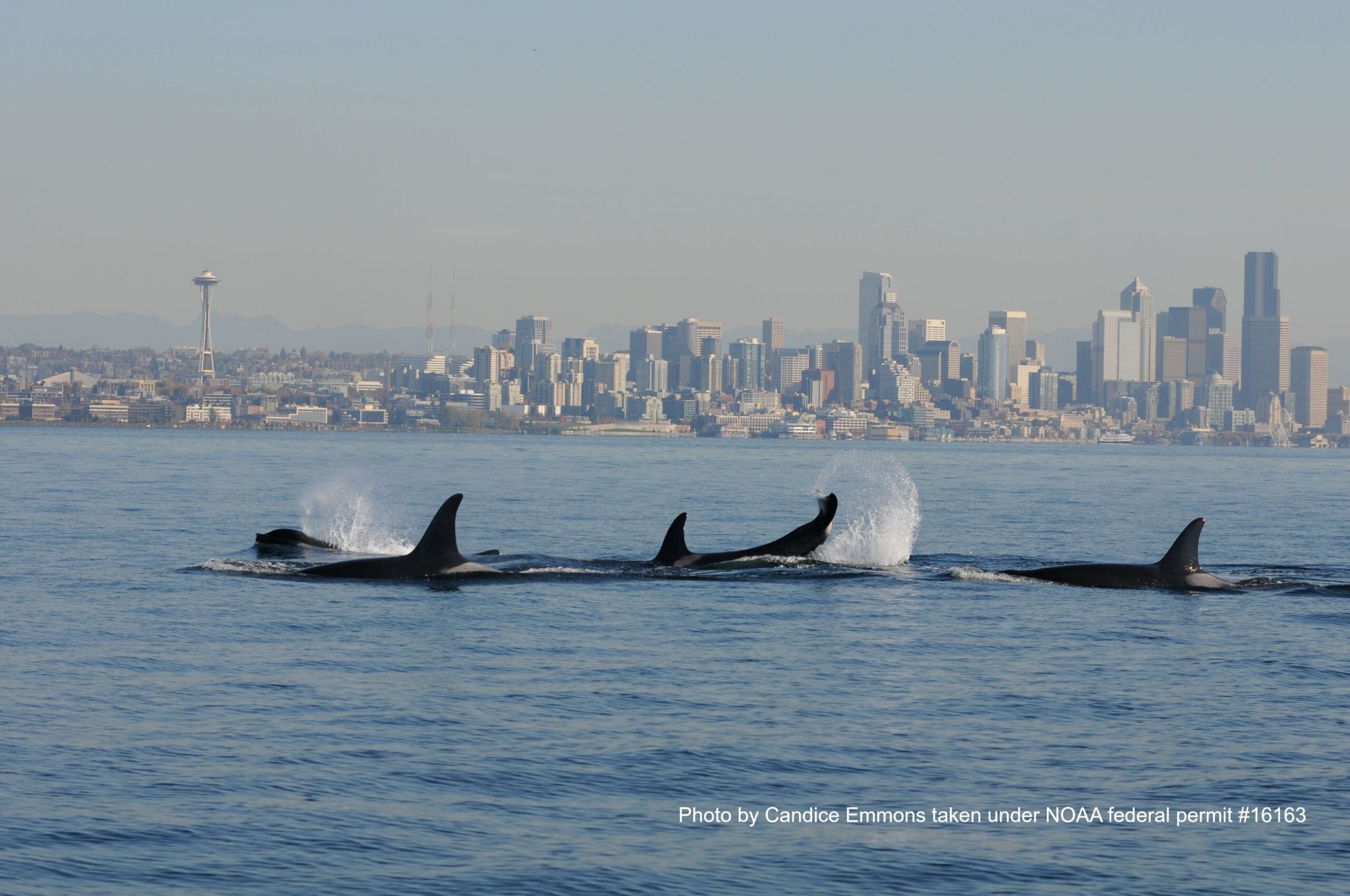
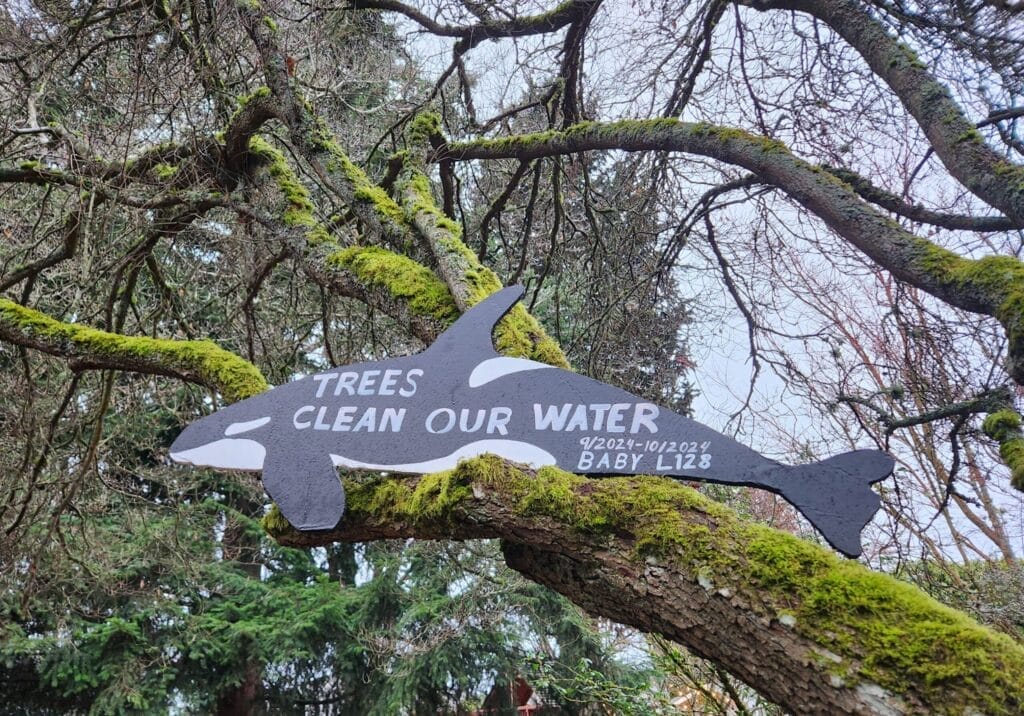
When we pave over ground, rain sheets off hot pavement carrying polluted stormwater runoff into the streams where salmon spawn. Fewer salmon means hungrier orca. The same plan that strips tree canopy from the neighborhoods already pushed to the edges is the plan fouling the water that feeds our salmon and the orca who depend on them. These are not separate fights. They are one, and the communities with the least power keep losing.
The Board was blunt:
“[T]he FEIS failed to implement a comprehensive approach to managing fish habitat (EN-9). Specifically, the City’s incorrect use of the maximum likely development did not represent a comprehensive approach to protecting fish streams from runoff generated by impervious surfaces.
“The FEIS acknowledges impervious-surface runoff as a significant environmental risk, but it failed to grapple with the scope of the new development capacity implemented by the Update.” (Final Decision and Order, p. 88)
This could have been settled months ago. Instead, the City improperly dismissed the Hearing Examiner appeal, which forced the fight up to the GMHB and cost everyone the time. Now, with CB 121215 banning citywide Hearing Examiner appeals, that becomes the blueprint. Fewer places to challenge bad analysis means more delay, not less.
We want growth done right: homes and an equitable urban forest, not one traded away for the other.
For more, watch this short video and to support the appeal, visit Orca Nexus.
What CB 121215 Does, and What Comes Next
On July 28, despite an overwhelming majority of public comments against it, the Council voted 5 to 4 to pass CB 121215.
The bill removes the community’s ability to appeal the City’s environmental review of the Comprehensive Plan and development regulations to the Hearing Examiner before those decisions become law. Until now, the Council could not adopt these plans until that pre-decision appeal was resolved. That safeguard is gone. The City’s most far-reaching land use decisions can now take effect before anyone can test whether the environmental review got the facts right.
Think of it like a labor negotiation. When talks break down, workers have the right to strike. Nobody wants to strike, and nobody wants to appeal. Both are a last resort, used only when a good-faith process has failed and real errors still remain on the table. CB 121215 takes that last resort away when it can still prevent harm, before the decision is final. When the environmental study can no longer be questioned, the families who pay first are those already living in Seattle’s most canopy-bereft neighborhoods, where heat, unhealthy air, and displacement pressure already fall hardest.
Appeals are not gone entirely, but the paths that remain are slower, more expensive, and only open after the plan is already adopted and the harm is locked in, through King County Superior Court or the state Growth Management Hearings Board. The state’s own housing exemptions have already narrowed what can be challenged at all. That is why the most visible challenge still standing, the Orca appeal, has had to rest on impacts to salmon and the orcas that depend on them.
The Orca appeal was filed before CB 121215 took effect, so it will move forward, but it will be the last citywide appeal of its kind that residents can bring to the Hearing Examiner. Meanwhile, the City is pressing ahead with an even larger phase of rezoning while serious questions about the adequacy of the original environmental impact statement remain unresolved and under challenge.
The vote was close. That is because of your activism. Thank you to everyone who testified at the meeting and wrote emails.
- Council President Hollingsworth and Councilmembers Saka, Rivera, and Juarez spoke against the bill and had the courage to vote no. Please email them and thank them.
- Please email those who voted yes, Councilmembers Lin, Foster, Rinck, Strauss, and Kettle, and let them know you are disappointed in their choice.
You can reach every Councilmember at council@seattle.gov, or contact them individually through this link.
Your voice has already made an impact. We will keep you updated on every opportunity to comment.
For background/historical information about the importance of Hearing Examiner appeals to racial and environmental equity, see this document. Councilmember Eddie Lin made statements in support of CB 121215 that are misleading, incomplete, or factually inconsistent with the documented record. The linked document refutes many of these.
Speak Up for Healthy, Livable Neighborhoods in ALL of Seattle
Phase 2 of the One Seattle Plan would significantly rezone neighborhoods across Seattle under what the Office of Planning and Community Development (OPCD) calls Centers and Corridors. Please write to your Councilmember.
Below are Trees and People Coalition’s recommendations and key context for your advocacy.
Our Recommendations:
Study Vancouver and Portland. Vancouver shows how broad upzoning attracts speculative investment. Portland’s missing-middle approach reduced prices and preserved neighborhoods. Seattle should learn from both.
Pass two Dense Forests for Dense Housing measures: require tree canopy in exterior amenity areas and make tree requirements a prerequisite for Green Factor scoring.
Remove Phase 2 upzones of the Central Area and Southeast Seattle, with no more than an LR1 designation for those urban centers.
Retain the 14th to 18th Avenue area to protect historical institutions rooted in the Black community.
Create a real, community-led anti-displacement plan centering communities of color, the Black community in the Central Area, and working class families.
Remove barriers to adaptive reuse of existing buildings, especially downtown.
Engage communities meaningfully, not as a checkbox.
What You Need to Know:
- Active legal appeals challenge the plan’s failure to address impacts on endangered Southern Resident Killer Whales. The City must resolve these before proceeding.
- According to the City’s own analysis, Phase 1 affected more than 100,000 residential sites across Seattle’s neighborhoods. The impact of that change deserves a full assessment before the city goes further.
- Studies show removing building regulations does not increase affordability. Since 2015, upzoning has mostly produced more market-rate dwellings.
- Central and southeast Seattle already carry a disproportionate share of the city’s housing targets. That is displacement dressed in planning language.
- The Office of Planning and Community Development’s Centers and Corridors proposal would create new heat islands and expand existing ones, threatening residents’ health across the city.
- For more details about these recommendations, click here.
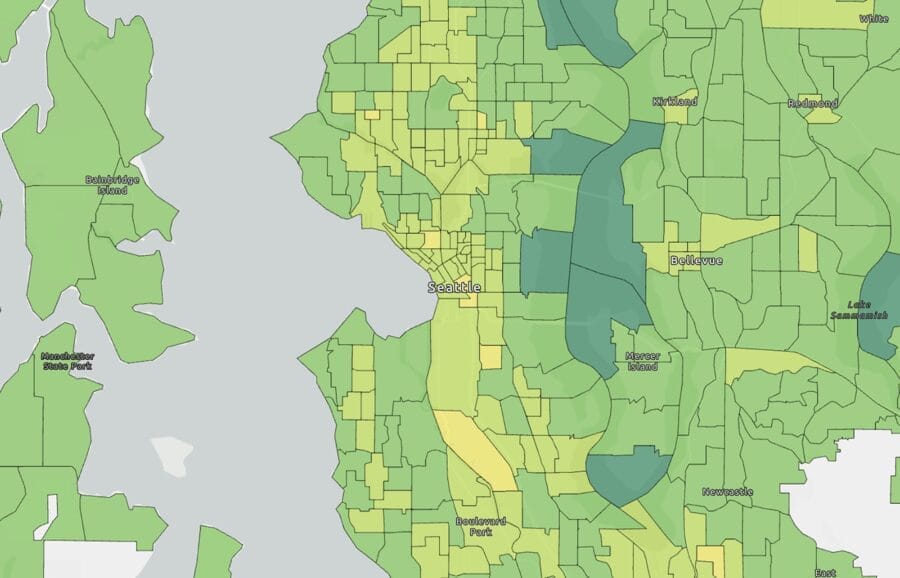
How much tree canopy does your neighborhood have?
Use TreeCanopy.us to see how much tree canopy is in the precinct where you live!
Switch to the Plan view to identify high priority neighborhoods.
Join Us at an Event
Join us at an in-person event and be a part of our community!
Make a Donation
Financial donations support the work we do. Funds processed through our fiscal sponsor, the Seattle Parks Foundation, may be tax deductible.
Volunteer With Us
Volunteer opportunities might include helping at an event, sending out emails, or doing research.